


 Faruq Niniola•August 7th, 2025•7 minute read min read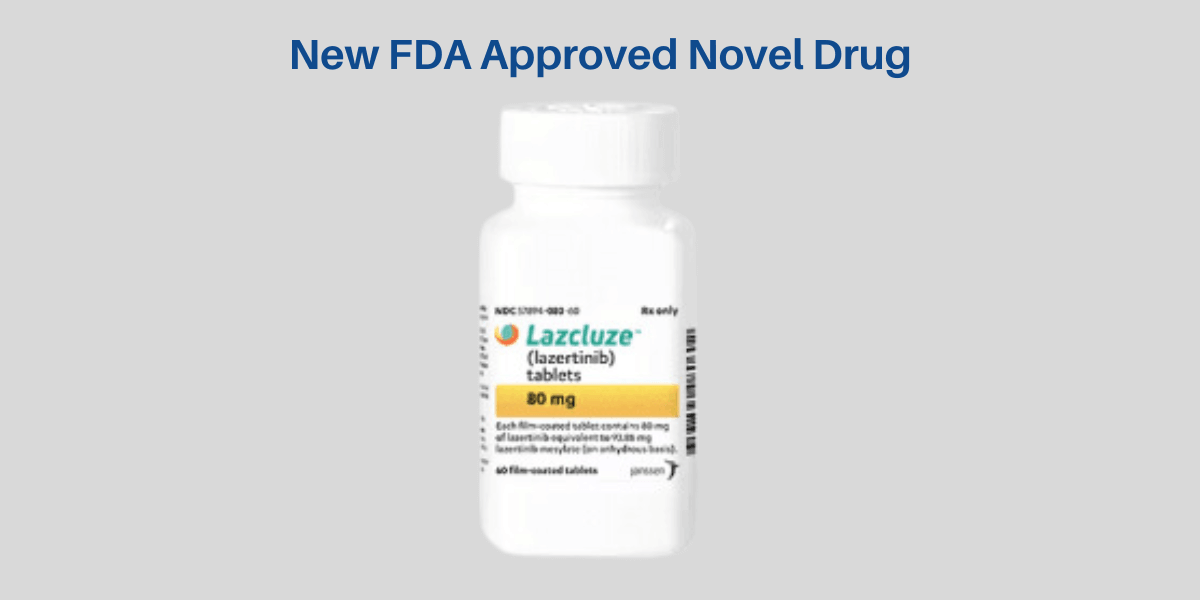
Table of Contents
- What Is Lazcluze Lazertinib?
- What Is Lazcluze Used For?
- How Does Lazcluze Lazertinib Work?
- FDA Approval of Lazcluze
- What Did the MARIPOSA Trial Show?
- How Is Lazcluze Taken?
- Common Side Effects of Lazcluze
- Lazcluze and Brain Metastases
- Why the Approval Matters
- What Patients Should Know
- The Future of Lazertinib in Cancer Treatment
- Final Thoughts
- FAQs
On August 19, 2024, the U.S. Food and Drug Administration (FDA) approved Lazcluze (lazertinib) in combination with amivantamab-vmjw (Rybrevant) for the first-line treatment of certain adults with locally advanced or metastatic non-small cell lung cancer (NSCLC).
The approval applies to patients whose tumors have specific epidermal growth factor receptor (EGFR) mutations: EGFR exon 19 deletions or exon 21 L858R substitution mutations, as detected by an FDA-approved test.
The approval makes Lazcluze lazertinib an important addition to the treatment options available for patients with EGFR-mutated NSCLC. However, it is important to understand that Lazcluze was approved as part of a combination regimen with amivantamab, rather than as a standalone NSCLC treatment.
What Is Lazcluze Lazertinib?
Lazcluze lazertinib is an oral kinase inhibitor developed by Janssen Biotech, Inc. The FDA granted its original U.S. approval on August 19, 2024.
Lazertinib belongs to a group of medicines known as EGFR tyrosine kinase inhibitors (TKIs). These medicines are designed to target abnormal signaling associated with specific EGFR mutations in cancer cells.
Lazcluze is supplied as oral tablets in 80 mg and 240 mg strengths.
Importantly, the FDA-approved use of Lazcluze is in combination with amivantamab for the specified EGFR-mutated NSCLC population.
What Is Lazcluze Used For?
Lazcluze is indicated in combination with amivantamab for the first-line treatment of adult patients with locally advanced or metastatic NSCLC whose tumors have:
- EGFR exon 19 deletions, or
- EGFR exon 21 L858R substitution mutations.
The mutation must be identified using an FDA-approved test.
This means Lazcluze is not intended for every person diagnosed with non-small cell lung cancer.
The patient's cancer stage, EGFR mutation status, previous treatment history and other clinical factors must be considered before treatment is selected.
How Does Lazcluze Lazertinib Work?
Lazertinib is an EGFR tyrosine kinase inhibitor.
Some NSCLC tumors contain mutations in the EGFR gene that can promote abnormal signaling and uncontrolled cancer-cell growth. Lazertinib targets EGFR signaling and inhibits kinase activity associated with these mutations.
The goal is to interfere with signals that help EGFR-mutated cancer cells grow and survive.
Because the drug targets a specific molecular abnormality, identifying the patient's EGFR mutation status is an important part of determining whether the treatment is appropriate.
FDA Approval of Lazcluze
The FDA approved Lazcluze on August 19, 2024, in combination with amivantamab for first-line treatment of adults with locally advanced or metastatic NSCLC carrying EGFR exon 19 deletions or exon 21 L858R mutations.
The approval was based primarily on results from the MARIPOSA trial, a randomized, active-controlled, multicenter study.
The FDA's approval represents an important development in targeted treatment for EGFR-mutated NSCLC.
It also illustrates the increasing role of molecular testing in modern cancer treatment, where treatment decisions can be guided by specific genetic characteristics of a patient's tumor.
What Did the MARIPOSA Trial Show?
The MARIPOSA trial evaluated the combination of lazertinib and amivantamab against osimertinib in patients with EGFR-mutated locally advanced or metastatic NSCLC who had not previously received systemic treatment for advanced disease.
The study included 1,074 patients in the primary efficacy analysis.
The FDA reported that Lazcluze combined with amivantamab produced a statistically significant improvement in progression-free survival compared with osimertinib.
Key MARIPOSA Results
| Treatment | Median progression-free survival |
|---|---|
| Lazcluze + amivantamab | 23.7 months |
| Osimertinib | 16.6 months |
The hazard ratio for progression-free survival was 0.70, with a 95% confidence interval of 0.58–0.85 and a p-value of 0.0002.
At the time of the FDA's review, overall survival data were not yet mature.
These results supported the FDA's approval of the combination for the specified patient population.
How Is Lazcluze Taken?
The recommended dose of Lazcluze is 240 mg orally once daily, with or without food, in combination with amivantamab. Treatment is continued until disease progression or unacceptable toxicity.
The appropriate administration schedule for amivantamab is separate and depends on factors including the patient's baseline body weight.
Patients should follow the dosing instructions provided by their oncology team and prescribing information rather than adjusting the dose themselves.
Common Side Effects of Lazcluze
Like other anticancer medicines, Lazcluze can cause adverse reactions.
The FDA reported common adverse reactions occurring in at least 20% of patients receiving Lazcluze in combination with amivantamab. These included:
- Rash
- Nail toxicity
- Infusion-related reactions
- Musculoskeletal pain
- Edema
- Stomatitis
- Venous thromboembolism
- Paresthesia
- Fatigue
- Diarrhea
- Constipation
- Dry skin
- Decreased appetite
- Pruritus
- Nausea
- Ocular toxicity
Other reactions were also reported.
Important Safety Consideration
The FDA identified a safety concern involving venous thromboembolic events (VTEs) with the Lazcluze and amivantamab combination.
The FDA states that prophylactic anticoagulation should be administered during the first four months of treatment, unless contraindicated.
Because cancer treatment can involve significant risks, patients should report concerning symptoms to their healthcare team promptly.
Lazcluze and Brain Metastases
Brain metastases can be a serious complication of advanced NSCLC.
Lazertinib has characteristics that allow it to reach the central nervous system, which is relevant when treating EGFR-mutated NSCLC involving or at risk of brain disease.
However, this should not be interpreted as meaning that Lazcluze is approved specifically as a treatment for all patients with brain metastases.
The FDA's approved indication is based on the specified EGFR-mutated NSCLC population, and individual treatment decisions should be made by the patient's oncology team.
Why the Approval Matters
The approval of Lazcluze lazertinib highlights the growing importance of precision medicine in oncology.
Rather than treating all NSCLC cases in exactly the same way, clinicians can use molecular testing to identify specific mutations and determine whether a targeted treatment may be appropriate.
For patients with the specific EGFR mutations covered by the FDA indication, the combination of Lazcluze and amivantamab provides another first-line treatment option.
The MARIPOSA results are particularly notable because the combination demonstrated longer progression-free survival than osimertinib in the trial population.
What Patients Should Know
Patients diagnosed with advanced or metastatic NSCLC may undergo molecular testing to identify mutations that can influence treatment decisions.
If an EGFR exon 19 deletion or exon 21 L858R mutation is identified, the oncology team may consider treatment options that target EGFR.
Patients should ask their healthcare providers questions such as:
- Does my tumor have an EGFR mutation?
- Which EGFR mutation was identified?
- Is Lazcluze appropriate for my cancer?
- Would Lazcluze be used with amivantamab?
- What benefits and risks should I expect?
- What monitoring will I need during treatment?
- What symptoms should I report immediately?
Treatment decisions should always be individualized based on the patient's diagnosis, overall health, cancer characteristics and treatment history.
The Future of Lazertinib in Cancer Treatment
The FDA approval of Lazcluze represents one step in the continuing development of targeted cancer therapy.
The FDA's approval was conducted through Project Orbis, an initiative designed to support concurrent regulatory review of oncology medicines among participating international regulatory agencies.
As additional clinical data become available, researchers will continue evaluating how lazertinib and other targeted therapies can be used to improve outcomes for people with EGFR-mutated cancers.
Final Thoughts
The FDA approval of Lazcluze lazertinib on August 19, 2024, introduced a new targeted treatment option for certain adults with locally advanced or metastatic EGFR-mutated NSCLC.
Importantly, Lazcluze is approved in combination with amivantamab, not as a standalone treatment for NSCLC. The approved population includes patients whose tumors have EGFR exon 19 deletions or exon 21 L858R substitution mutations.
Evidence from the MARIPOSA trial showed that the combination improved progression-free survival compared with osimertinib, with median progression-free survival of 23.7 months versus 16.6 months.
For patients and healthcare professionals, the approval reinforces the importance of molecular testing and personalized treatment in modern lung cancer care.
Anyone considering Lazcluze should discuss its potential benefits, risks, dosing and suitability with a qualified oncology professional.
Pharm Tech Important Link Bank:
Here are a few helpful resources to support your pharmacy technician career:
🔗 Free CEUs for Pharmacy Technicians
https://www.pharmtechsonly.com/resource-center/free-ceus/
🔗 Search Upcoming Conventions in Your Area
https://www.pharmtechsonly.com/resource-center/conventions/
🔗 Rx Study Buddy Kit (Top 200, Math, Law)
https://www.pharmtechsonly.com/store/
🔗 Search Pharmacy Technician Jobs
https://tc.pharmtechsonly.com/careers
FAQs
What is Lazcluze (lazertinib)?
Lazcluze is the brand name for lazertinib, an oral EGFR tyrosine kinase inhibitor used as a targeted cancer treatment.
What is Lazcluze used to treat?
Lazcluze is FDA-approved in combination with amivantamab for the first-line treatment of adults with locally advanced or metastatic non-small cell lung cancer (NSCLC) whose tumors have EGFR exon 19 deletions or exon 21 L858R mutations.
Is Lazcluze a chemotherapy drug?
No. Lazcluze is a targeted therapy, specifically an EGFR tyrosine kinase inhibitor. It works by targeting abnormal EGFR signaling associated with certain NSCLC mutations.
Is Lazcluze used alone?
No. For its FDA-approved NSCLC indication, Lazcluze is used in combination with amivantamab-vmjw (Rybrevant).
How effective is Lazcluze for NSCLC?
In the MARIPOSA clinical trial, the combination of Lazcluze and amivantamab produced a median progression-free survival of 23.7 months, compared with 16.6 months with osimertinib.

