


 Faruq Niniola•September 10th, 2025•6 minute read min read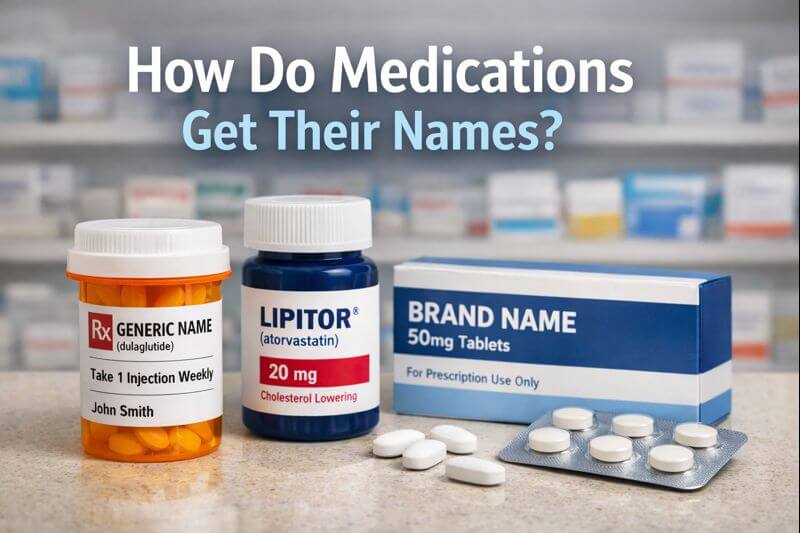
Table of Contents
- Understanding the Two Names Every Medication Has
- How Generic Drug Names Are Created
- Drug Name Stems: The Hidden Code
- Why Generic Names Sound Unusual
- Safety Rules Behind Generic Naming
- The Approval Process for Generic Names
- Brand Names: Creativity With Constraints
- How Pharmaceutical Brand Names Are Developed
- Global Challenges in Drug Naming
- Biologics and Biosimilars: Modern Naming Rules
- OTC vs Prescription Drug Naming
- Why Drug Naming Matters to Pharmacy Technicians
- Final Thoughts: More Than Just a Name
- Pharm Tech Important Link Bank:
How do medications get their names is one of the most common questions pharmacy technicians hear from patients and it’s a fair one. Drug names can sound unfamiliar, complicated, and sometimes even confusing. But behind every medication name is a carefully regulated, global process designed with one goal in mind: patient safety.
From the scientific structure of generic names to the heavily scrutinized creativity of brand names, drug naming is far from random. At Pharm Techs Only!, we believe pharmacy technicians should understand this process, because you’re often the last line of defense against medication errors. Let’s take a behind-the-scenes look at how do medications get their names, from laboratory discovery to pharmacy shelves worldwide.
Understanding the Two Names Every Medication Has
To understand how medications get their names, you first need to know that nearly every drug has two official names:
Generic name (also called an International Nonproprietary Name or INN)
Brand name (also called a proprietary or trade name)
Example
Generic: atorvastatin
Brand: Lipitor
The generic name is the drug’s universal identity. It stays the same across countries and manufacturers. The brand name is created by the pharmaceutical company that first markets the drug and is protected by trademark laws.
These two names follow completely different approval pathways—and both are tightly regulated.
How Generic Drug Names Are Created
When pharmacy professionals ask, how do medications get their names, generic naming is where science takes the lead.
Generic names are approved by national and international authorities, including:
The United States Adopted Names Council
The World Health Organization (WHO), which assigns INNs used globally
The goal is consistency, clarity, and safety across borders.
Drug Name Stems: The Hidden Code
Generic names use a stem-based system, where specific syllables identify a drug’s class or mechanism of action. Pharmacy technicians rely on these stems daily, often without realizing it.
Common Drug Stems
-pril → ACE inhibitors (lisinopril)
-statin → Cholesterol-lowering agents (atorvastatin)
-olol → Beta blockers (propranolol)
-mab → Monoclonal antibodies (adalimumab)
-prazole → Proton pump inhibitors (omeprazole)
These stems help healthcare professionals quickly identify what a drug does, even before opening a reference guide.
This structured system is a major reason how do medications get their names sounds complex, because precision matters more than simplicity.
Why Generic Names Sound Unusual
Many patients wonder why generic names feel awkward to pronounce. There’s a reason:
They avoid real words to prevent confusion
They use Latin or Greek roots for scientific neutrality
They must be globally unique
A name that works safely in English must also avoid problems in Spanish, French, Mandarin, and dozens of other languages.
Safety Rules Behind Generic Naming
When discussing how do medications get their names, safety is the non-negotiable priority.
Authorities test names for:
Look-alike and sound-alike risks
Handwritten and electronic prescribing errors
Verbal miscommunication across accents and dialects
Confusing names have caused real harm in healthcare. Even a one-letter difference can lead to incorrect dispensing.
This is why generic names must be clearly distinguishable from existing drugs, no exceptions.
The Approval Process for Generic Names
Here’s a simplified look at how a generic name is approved:
Manufacturer submits several name proposals
Linguistic and safety analysis is performed
Names are tested for similarity and translation issues
Revisions and negotiations occur
Final approval by global naming authorities
It can take months or even years before a generic name is finalized.
Brand Names: Creativity With Constraints
If generic names are science-driven, brand names are where marketing enters—but still under strict regulation.
Brand names must be:
Easy to remember
Distinct from other drugs
Non-misleading
Safe when spoken or written
In the U.S., brand names are reviewed by the Food and Drug Administration, specifically through its medication error prevention teams.
Only a small fraction of proposed brand names ever get approved.
How Pharmaceutical Brand Names Are Developed
To answer how do medications get their names on the brand side, companies often hire specialized naming firms.
The process includes:
Linguistic testing
Trademark screening
Cultural evaluation
Market research
Regulatory risk analysis
Brand names often subtly hint at a drug’s purpose, but they’re not allowed to exaggerate benefits or imply cures.
Global Challenges in Drug Naming
Drug naming is a global issue.
Some medications share the same generic name worldwide thanks to WHO coordination. Others differ due to historical or regional naming conventions.
Examples
Acetaminophen (U.S.) vs. paracetamol (international)
Epinephrine (U.S.) vs. adrenaline (international)
Brand names also vary by country to avoid confusion with existing products.
Biologics and Biosimilars: Modern Naming Rules
Biologic medications introduced a new challenge to how do medications get their names.
Biosimilars use:
A shared core generic name
A unique four-letter suffix
Example: infliximab-dyyb
The suffix does not indicate effectiveness or interchangeability. It exists purely for tracking safety and adverse events.
OTC vs Prescription Drug Naming
Over-the-counter drugs follow the same naming principles:
Generic names remain standardized
Brand names are still reviewed for safety
The difference is that OTC branding is consumer-facing, which increases the importance of clarity and recognition.
Why Drug Naming Matters to Pharmacy Technicians
Understanding how medications get their names directly impacts your work as a pharmacy technician.
Clear naming:
Reduces dispensing errors
Improves patient education
Enhances medication adherence
Protects patient safety
Confusing names are a known contributor to adverse drug events worldwide.
Final Thoughts: More Than Just a Name
So, how do medications get their names? Through years of science, international cooperation, linguistic testing, and relentless focus on safety.
Every medication name represents:
Scientific classification
Regulatory oversight
Global coordination
Patient protection
For pharmacy technicians, knowing the story behind the name isn’t just interesting—it’s empowering. You’re not just reading a label. You’re interpreting a carefully engineered safety system designed to protect lives.
In a healthcare system where accuracy matters at every step, understanding drug naming is another tool pharmacy technicians use to protect patients. Knowing how medications get their names reinforces why precision, vigilance, and education are essential parts of the pharmacy technician role worldwide.
Pharm Tech Important Link Bank:
Here are a few helpful resources to support your pharmacy technician career:
🔗 Free CEUs for Pharmacy Technicians
https://www.pharmtechsonly.com/resource-center/free-ceus/
🔗 Search Upcoming Conventions in Your Area
https://www.pharmtechsonly.com/resource-center/conventions/
🔗 Rx Study Buddy Kit (Top 200, Math, Law)
https://www.pharmtechsonly.com/store/

