


Table of Contents
- Inpatient Pharmacy Technician Salary vs Retail
- Retail Pharmacy Technician Salary
- Hospital (Inpatient) Pharmacy Technician Salary
- Why Hospital Pharmacy Pays More
- Work Environment Differences
- Do You Need Hospital Experience First?
- Career Advancement Opportunities
- How to Move From Retail Pharmacy to Hospital Pharmacy
- Where to Find Hospital Pharmacy Technician Jobs
- Shift Differentials and Total Annual Earnings
- Benefits Comparison: Retail vs Hospital Pharmacy
- Job Stability and Scheduling
- Skills You Gain in Hospital Pharmacy
- Long-Term Career Outlook
- Is Leaving Retail Worth It?
- Pharm Tech Important Link Bank:
- FAQs
Many technicians begin researching inpatient pharmacy technician salary vs retail when they start wondering if staying in chain pharmacy is worth it long-term. After a few years behind the counter, most technicians notice the workload increases much faster than the pay.
So does moving to a hospital actually make a financial difference?
In 2026, the answer is generally yes. Hospital (inpatient) pharmacy technicians typically earn higher hourly pay, better benefits, and significantly more career growth opportunities compared to retail pharmacy technicians.
Below is a clear breakdown of retail vs inpatient pay, what causes the salary gap, and how technicians are successfully transitioning into hospital roles.
Inpatient Pharmacy Technician Salary vs Retail
Here is the direct comparison technicians are actually searching for.
| Setting | Entry Level | Experienced | Advanced Roles |
|---|---|---|---|
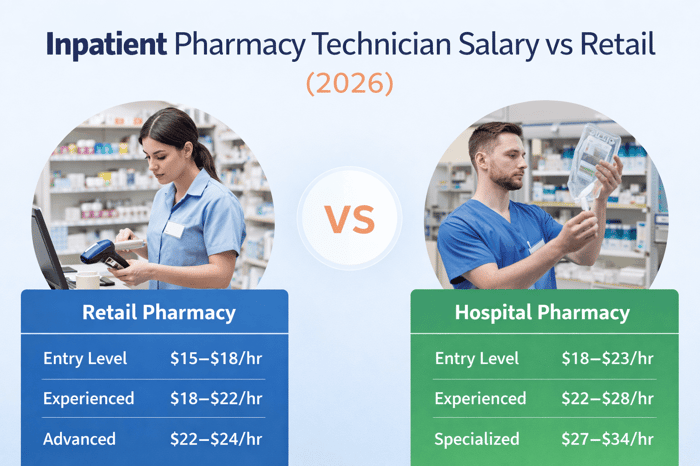
| Retail Pharmacy | $15–$18/hr | $18–$22/hr | $22–$24/hr |
| Hospital / Inpatient | $18–$23/hr | $22–$28/hr | $27–$34/hr |
The inpatient pharmacy technician salary vs retail difference may only look a few dollars higher at first, but over time it becomes substantial because hospital positions include shift differentials, stronger raises, and specialized roles.
Retail Pharmacy Technician Salary
Retail pharmacies include chain stores, grocery pharmacies, and independent pharmacies. This is where most technicians start their careers and gain medication knowledge, workflow experience, and insurance familiarity.
Typical retail technician responsibilities:
prescription processing
insurance adjudication
customer service
ringing transactions
phone calls and prior authorizations
Retail technicians often face:
heavy prescription volume
understaffing
performance metrics
limited promotion paths
Retail raises are usually annual cost-of-living increases rather than skill-based pay increases, which is why many technicians begin comparing hospital pharmacy technician salary options.
Hospital (Inpatient) Pharmacy Technician Salary
Hospital pharmacy technicians work within healthcare facilities supporting patient treatment teams rather than customer transactions.
Typical inpatient technician responsibilities:
sterile IV compounding
medication cart fills
Pyxis or Omnicell restocking
medication delivery to nursing units
medication history collection
controlled substance documentation
Typical hospital pay ranges in 2026:
Entry level: $18–$23/hr
Certified/experienced: $22–$28/hr
Specialized: $27–$34/hr
Many hospitals also provide:
evening and night shift differential (+$2–$8/hr)
weekend premium pay
stronger health insurance
retirement matching
tuition reimbursement
These additional factors widen the inpatient pharmacy technician salary vs retail gap over time.
Why Hospital Pharmacy Pays More
The primary reason hospital technicians earn more is responsibility level and technical skill.
Retail pharmacy focuses mainly on dispensing and insurance processing.
Inpatient pharmacy involves clinical support functions such as:
sterile compounding accuracy
medication safety procedures
patient care support
automation system management
coordination with nurses and pharmacists
Hospitals require higher accuracy standards and expanded technical duties, which directly increases compensation.
Work Environment Differences
Retail Pharmacy
public-facing customer interaction
phone calls and insurance issues
fixed store hours
high daily script volume
Hospital Pharmacy
team-based clinical environment
minimal insurance billing
structured workflows
multiple specialized departments
Many technicians report that stress level changes more than pay when moving from retail to inpatient pharmacy.
Do You Need Hospital Experience First?
A common misconception is that hospital experience is required before getting hired. In reality, many hospitals hire retail technicians and train them.
Hospitals typically look for:
strong attention to detail
reliability
willingness to learn sterile compounding
certification (helpful but not always mandatory)
Retail experience is valuable because technicians already understand medications, pharmacy workflow, and safety practices.
Career Advancement Opportunities
Retail pharmacy advancement:
senior tech
lead tech
store management support
Hospital pharmacy advancement:
IV compounding specialist
oncology technician
medication reconciliation technician
automation specialist
purchasing technician
pharmacy informatics support
This long-term growth potential is a major reason searches for inpatient pharmacy technician salary vs retail continue to rise.
How to Move From Retail Pharmacy to Hospital Pharmacy
Technicians who successfully transition typically:
Update their resume to highlight accuracy and workflow experience
Emphasize high prescription volume handling
Apply to inpatient and health-system positions
Accept evening or weekend shifts initially
Learn sterile compounding on the job
Hospitals often prefer retail technicians because they already understand fast-paced pharmacy environments.
Where to Find Hospital Pharmacy Technician Jobs
If you are comparing inpatient pharmacy technician salary vs retail, you are likely considering making a career change.
You can search pharmacy technician job opportunities here:
https://www.careers.pharmtechsonly.com
Pharm Techs Only! lists pharmacy technician openings across retail, hospital, and specialty settings so technicians can explore new work environments and apply directly to employers.
Shift Differentials and Total Annual Earnings
One of the biggest reasons the inpatient pharmacy technician salary vs retail gap grows over time is shift differentials.
Retail pharmacy typically pays a flat hourly rate regardless of schedule. Hospitals, however, operate 24 hours a day and pay premiums for less desirable shifts.
Common hospital shift differentials include:
Evening shift: +$2–$4 per hour
Overnight shift: +$4–$8 per hour
Weekend shifts: additional hourly premium
For example:
A retail technician earning $21/hr works 40 hours per week:
Annual income: about $43,680
A hospital technician earning $23/hr plus a $4 shift differential:
Effective pay: $27/hr
Annual income: about $56,160
Over several years, this difference becomes significant. Many technicians discover the inpatient pharmacy technician salary vs retail comparison is less about starting pay and more about long-term earning potential.
Benefits Comparison: Retail vs Hospital Pharmacy
Salary alone does not show total compensation. Benefits are another major factor when comparing retail and hospital positions.
Retail Benefits (Typical)
limited PTO
basic health insurance
minimal retirement contribution
fixed vacation approval
Hospital Benefits (Typical)
stronger medical coverage
retirement matching (often 3–6%)
paid education or certification reimbursement
more predictable scheduling
paid holidays
Many technicians find the total compensation package in hospitals is worth thousands of dollars per year beyond hourly pay.
Job Stability and Scheduling
Retail pharmacy staffing levels depend heavily on prescription volume and corporate budgets. Hours may be reduced during slower seasons or reorganizations.
Hospitals function differently. They must maintain pharmacy coverage for patient care at all times. Because of this, hospital pharmacy technicians often experience:
more stable hours
consistent full-time scheduling
less last-minute schedule changes
structured staffing ratios
This stability is another reason technicians begin researching inpatient pharmacy technician salary vs retail when considering long-term career options.
Skills You Gain in Hospital Pharmacy
Another overlooked advantage of hospital pharmacy is transferable skills. Retail pharmacy builds strong workflow and communication abilities, but inpatient pharmacy adds technical competencies.
Hospital technicians may learn:
sterile compounding techniques
IV preparation
medication safety protocols
automation systems (Pyxis, Omnicell)
interdisciplinary communication
These skills open additional career paths in healthcare systems, specialty pharmacies, compounding facilities, and pharmacy informatics roles.
Long-Term Career Outlook
When comparing inpatient pharmacy technician salary vs retail, long-term earning potential matters more than first-year pay.
Retail technicians often reach a pay ceiling within a few years. Hospital technicians, however, can move into specialty areas and continue increasing compensation.
Possible long-term roles:
lead inpatient technician
sterile compounding specialist
oncology technician
purchasing coordinator
medication history technician
pharmacy automation support
Because hospitals are part of larger health systems, internal transfers and promotions are more common than in retail environments.
Is Leaving Retail Worth It?
Financially, inpatient pharmacy typically offers better long-term earnings.
Professionally, it offers more growth and specialized skills.
The inpatient pharmacy technician salary vs retail difference becomes larger over time due to shift differentials, certifications, and advancement opportunities.
Retail pharmacy is where many technicians begin their careers.
Hospital pharmacy is where many build a sustainable one.
Pharm Tech Important Link Bank:
Here are a few helpful resources to support your pharmacy technician career:
🔗 Free CEUs for Pharmacy Technicians
https://www.pharmtechsonly.com/resource-center/free-ceus/
🔗 Search Upcoming Conventions in Your Area
https://www.pharmtechsonly.com/resource-center/conventions/
🔗 Rx Study Buddy Kit (Top 200, Math, Law)
https://www.pharmtechsonly.com/store/
FAQs
Do hospital pharmacy technicians make more than retail?
In most regions, yes. Hospitals offer higher hourly pay plus shift differentials and benefits.
Can you get a hospital job without hospital experience?
Yes. Many hospitals hire retail technicians and provide on-the-job training.
Is certification required for inpatient pharmacy?
Not always, but PTCB certification increases hiring chances and pay.
Are hospital pharmacy jobs less stressful?
They are different. Stress is typically workflow-based rather than customer-service-based.
How long does it take to transition from retail to hospital?
Many technicians transition within a few months once actively applying.