


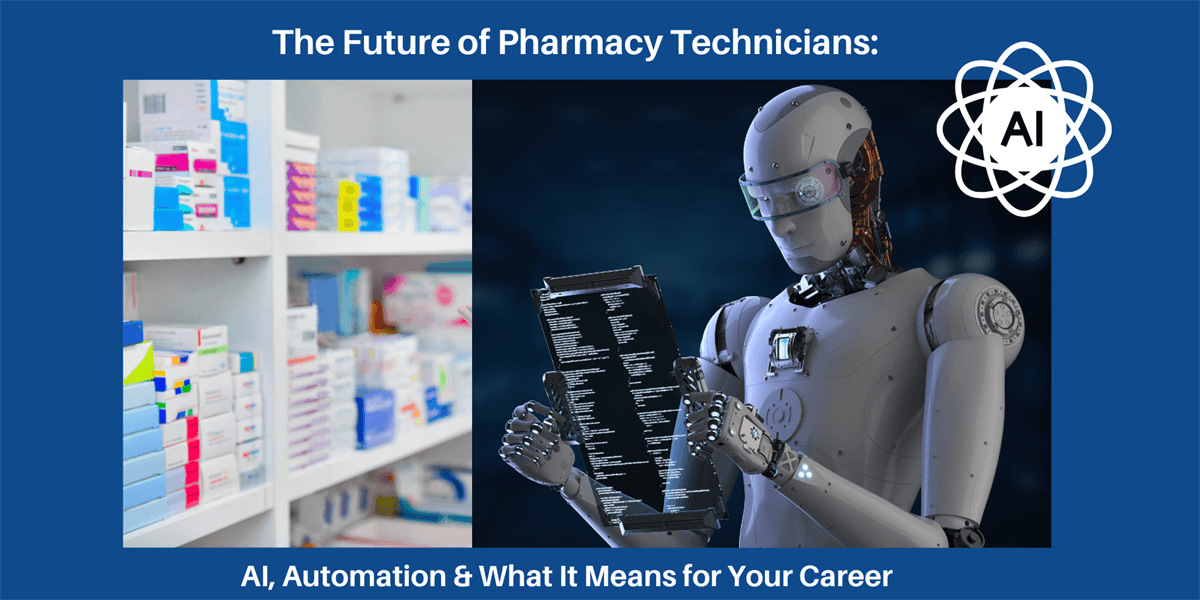
The pharmacy industry is evolving rapidly, and pharmacy technicians are at the forefront of this transformation. Advances in artificial intelligence (AI) and automation are reshaping the way medications are dispensed, prescriptions are managed, and pharmacy workflows operate. While some may view these advancements as a threat to job security, others see them as opportunities for career growth and expansion. This blog explores how AI and automation are changing pharmacy technician roles and provides strategies for staying relevant in the field.
The Role of AI and Automation in Pharmacy
AI and automation are being integrated into pharmacy practice in several ways, including:
Automated Dispensing Machines (ADMs) – Machines like the BD Pyxis, Omnicell, and ScriptPro automate the counting, labeling, and dispensing of medications.
Robotic Prescription Fulfillment – Robotic systems, such as those used in central fill pharmacies, can prepare thousands of prescriptions daily with minimal human intervention.
AI-Powered Drug Interaction Alerts – AI-driven software analyzes patient records to detect potential medication interactions and suggest safer alternatives.
Telepharmacy & Remote Verification – AI enables pharmacists to oversee prescriptions remotely, reducing the need for on-site staffing in some areas.
AI Chatbots & Virtual Assistants – These tools assist customers by answering questions, refilling prescriptions, and providing medication adherence reminders.
Inventory Management Systems – AI-driven systems predict inventory needs, reducing medication shortages and waste.
These technological advancements have created a more efficient and accurate pharmacy environment but have also raised questions about how they impact the role of pharmacy technicians.
How AI and Automation Are Changing Pharmacy Technician Roles 1. Shifting Responsibilities
Automation and AI reduce the time pharmacy technicians spend on routine tasks, such as counting pills and entering data, but they increase the need for technicians to manage and oversee these systems. This means pharmacy technicians must be comfortable troubleshooting technology and ensuring its proper function.
2. Increased Emphasis on Patient Interaction
With machines handling many dispensing tasks, pharmacy technicians are expected to take on more patient-centered responsibilities, such as:
Counseling patients on medication adherence
Assisting with insurance claims and prior authorizations
Providing immunization support in some settings
3. More Opportunities in Telepharmacy
Telepharmacy allows pharmacy services to be provided remotely, which creates opportunities for technicians to work outside of traditional retail or hospital settings. Many technicians are now assisting pharmacists in verifying prescriptions and providing remote customer support.
4. Growing Need for Data Management Skills
As AI-driven systems analyze vast amounts of patient data, pharmacy technicians will need to understand how to input, manage, and interpret this information accurately. The ability to navigate electronic health records (EHRs) and pharmacy management systems will be a crucial skill moving forward.
5. New Roles in Specialty Pharmacy
Automation allows for more personalized and complex medication therapies, increasing the need for pharmacy technicians in specialty areas such as oncology, compounding, and biologics.
The Future of Pharmacy Technician Jobs: Threat or Opportunity?
Many pharmacy technicians worry that automation will lead to job losses. While it is true that some manual roles may decrease, the overall demand for skilled technicians is expected to remain strong. According to the U.S. Bureau of Labor Statistics, employment for pharmacy technicians is projected to grow by 6% from 2022 to 2032, about as fast as the average for all occupations.
Why Demand for Pharmacy Technicians Will Persist:
Aging Population – As the global population ages, medication demand will increase, requiring skilled technicians to assist with prescription fulfillment and patient care.
Expanded Scope of Practice – Many states and countries are expanding the responsibilities of pharmacy technicians, including administering immunizations and medication therapy support.
The Need for Human Oversight – Despite advances in AI, human judgment is still crucial in pharmacy practice to ensure patient safety, handle complex prescriptions, and provide compassionate care.
How Pharmacy Technicians Can Stay Relevant
As technology advances, pharmacy technicians must adapt to remain competitive in the workforce. Here’s how:
1. Embrace Lifelong Learning
Take continuing education (CE) courses on emerging pharmacy technologies.
Stay updated on AI developments in healthcare and pharmacy.
Pursue certifications in areas like sterile compounding, medication therapy management (MTM), and immunizations.
2. Develop Tech-Savvy Skills
Learn how to use and troubleshoot automated dispensing systems.
Gain experience with electronic health records and pharmacy management software.
Understand how AI-driven decision-support tools work.
3. Expand Your Clinical Knowledge
Take courses on pharmacology and disease management.
Learn about specialty pharmacy areas, such as oncology and biologics.
Understand the role of pharmacy technicians in patient counseling and adherence programs.
4. Improve Soft Skills
Develop strong communication skills to assist patients and collaborate with pharmacists.
Enhance problem-solving abilities to address system errors and medication issues.
Build customer service skills to provide better patient care and education.
5. Consider Specialization
Explore careers in compounding, specialty pharmacy, or informatics.
Look into roles in regulatory compliance and quality assurance.
Consider telepharmacy or working in mail-order pharmacies.
Conclusion: A Bright Future with the Right Adaptation
The integration of AI and automation in pharmacy is inevitable, but it does not spell the end of pharmacy technician jobs. Instead, it presents an opportunity for technicians to shift from repetitive tasks to more meaningful, patient-focused roles. By embracing continuous learning, gaining technical expertise, and developing strong clinical and soft skills, pharmacy technicians can thrive in this evolving industry.
Pharm Techs Only! is committed to supporting pharmacy technicians in navigating these changes. Whether you’re looking for educational resources, career advice, or networking opportunities, we’re here to help you stay ahead in this exciting new era of pharmacy.
What are your thoughts on AI and automation in pharmacy? Are you preparing for the future of pharmacy technician roles? Join the discussion in the comments!

