


 Faruq Niniola•August 7th, 2025•9 minute read min read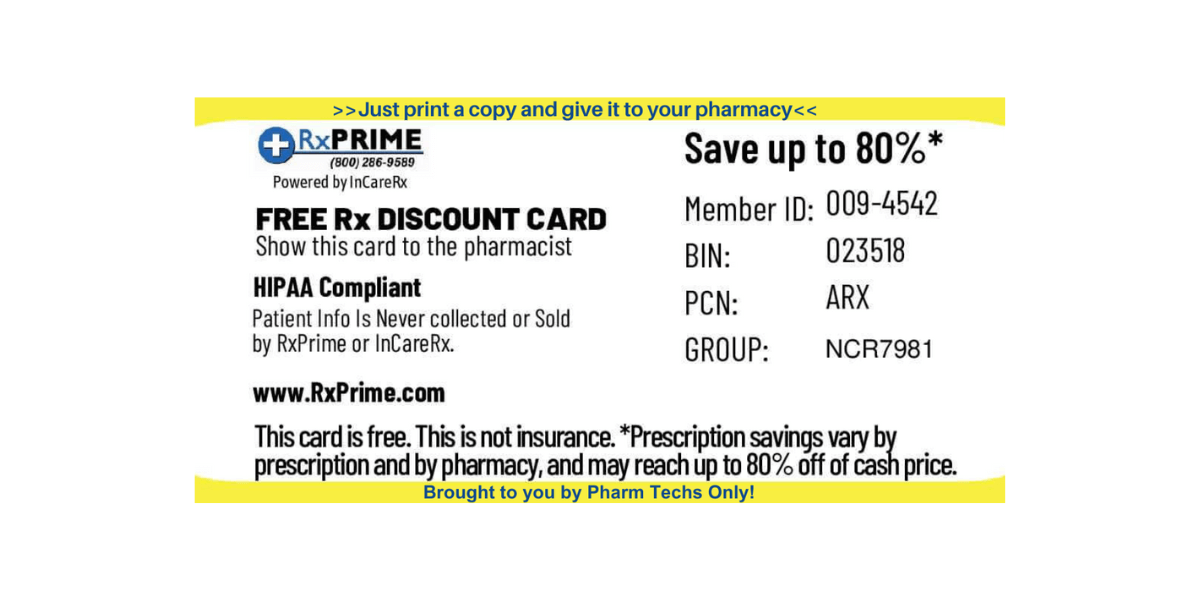
Table of Contents
- Prescription Discount Card?
- How Does a Prescription Discount Card Work?
- Who Can Use a Prescription Discount Card?
- 1. It Is Not Insurance
- 2. You Generally Cannot Combine It With Insurance
- 3. Your Discount May Not Count Toward Your Deductible
- 4. Prices Can Vary
- 5. You Still Need a Valid Prescription
- 6. Certain Restrictions May Apply
- FAQs
Have you ever picked up a prescription and been surprised by how much it costs?
Or perhaps your insurance doesn't cover the medication, your deductible makes your copay too expensive, or you simply want to see whether there is a lower cash price available.
If so, a free prescription discount card may help you save money on eligible prescription medications.
A prescription discount card is a savings tool that can provide a discounted cash price on eligible medications at participating pharmacies. It is not health insurance, and the amount you save depends on the medication, pharmacy, and available discount.
The best part?
Some prescription discount cards are completely free to use.
In this guide, we'll explain how a free prescription discount card works, who can use one, when it may be useful even if you have insurance, how to use it at the pharmacy, and what you should know before using one.
Prescription Discount Card?
A free prescription discount card is a savings program that can provide discounts on eligible prescription medications at participating pharmacies.
Unlike health insurance, a prescription discount card generally does not pay part of your prescription claim.
Instead, the card gives you access to a discounted price, and you pay the discounted cash price at the pharmacy.
That distinction is important.
A prescription discount card is not insurance.
It is a way to potentially reduce the amount you pay for an eligible prescription.
Many prescription discount programs are free to access and do not require a monthly membership fee.
How Does a Prescription Discount Card Work?
Using a prescription discount card is generally simple.
Step 1: Get Your Card
Obtain a physical or digital prescription discount card.
Depending on the program, you may be able to print the card, save it to your phone, or receive it by email or text.
Step 2: Check the Medication Price
Use the program's website or pharmacy pricing tool, when available, to check the discounted price for your medication.
Prices can vary depending on the medication and pharmacy.
Step 3: Take Your Prescription to a Participating Pharmacy
Bring your valid prescription and your discount card to a participating pharmacy.
Step 4: Show the Card to the Pharmacy
Tell the pharmacy staff that you want to use the prescription discount card.
The pharmacy will process the prescription using the discount information.
Step 5: Pay the Discounted Price
If the discount price is lower than the price you would otherwise pay, you pay the discounted amount at the pharmacy.
Who Can Use a Prescription Discount Card?
Many free prescription discount programs are designed to be available to a broad range of people.
Depending on the specific program, you may be able to use a discount card if you:
- Don't have prescription insurance
- Have health insurance
- Have a high deductible
- Have a prescription that isn't covered by your insurance
- Have a prescription with a high copay
- Want to compare the insurance price with a discounted cash price
For example, Rx.com currently states that its discount card is available to everyone who has a valid prescription, although restrictions can apply to certain medications and government-program beneficiaries.
Always check the terms of the particular card you are using.
Can I Use a Discount Card If I Have Insurance?
Sometimes, yes—but the discount card generally has to be used instead of your insurance, not combined with it.
This is one of the most important things to understand about prescription discount cards.
Suppose your insurance copay for a medication is $40.
You check a prescription discount card and discover that the cash price using the card is $18.
In that situation, you may choose to pay the $18 discount-card price instead of processing the prescription through your insurance.
However, the discount-card purchase generally does not count as an insurance claim, and the amount you pay may not count toward your deductible or out-of-pocket maximum.
Therefore, always compare:
Insurance price vs. discount-card price
before deciding which option is cheaper.
When Should I Use a Prescription Discount Card?
A free prescription discount card may be particularly useful in situations such as:
Your Insurance Doesn't Cover the Medication
If your insurance plan excludes a medication, a discount card may provide an alternative cash price.
Your Copay Is High
Sometimes your insurance copay may be higher than the price available through a prescription discount program.
You Have a High Deductible
If you have not met your prescription deductible, compare the cash discount price with the amount you would pay through your insurance.
You Don't Have Prescription Insurance
People without prescription insurance may use eligible discount cards to potentially reduce their out-of-pocket prescription costs.
You Want to Compare Prices
Even if your insurance covers the medication, comparing prices can help you determine which option costs less.
Remember: A discount card is not automatically the cheapest option. Always compare the available prices.
How Much Can I Save With a Prescription Discount Card?
The amount you save depends on several factors.
These include:
- The medication
- Whether it is generic or brand-name
- The pharmacy
- The quantity
- The dosage
- The discount program
- Current negotiated pricing
RxPrime currently advertises potential savings of up to 80% off the cash price, but its site notes that savings vary by prescription and pharmacy.
Therefore, it is better to think of “up to 80%” as a maximum advertised potential, not a guaranteed discount.
Your actual savings could be substantially lower or the discounted price may not be better than another available price.
Where Can I Use a Prescription Discount Card?
Prescription discount cards are accepted only at participating pharmacies.
The participating pharmacy network depends on the specific discount program.
The original version of this article listed CVS, Publix, Rite Aid, Walmart, Kroger, and Walgreens. Rather than presenting that list as universally applicable, readers should check the current pharmacy network for the specific card they are using.
Pharmacy participation can change.
Some prescription discount programs have broad networks that include major chains and independent pharmacies.
Always verify the pharmacy and medication price before making the trip.
Can I Use a Prescription Discount Card for My Pet?
Some prescription discount programs may allow eligible human prescription medications prescribed for pets to be purchased through participating pharmacies.
However, this depends on the specific program, medication, pharmacy, and prescription.
If your veterinarian prescribes a medication for your pet, ask the pharmacy whether the prescription can be processed using the discount program.
Never give your pet a medication simply because a discount card makes it cheaper.
The medication and dose should be determined by a veterinarian.
How to Get a Free Prescription Discount Card
If you want to try a free prescription discount card, the process is usually straightforward.
For the card promoted by Pharm Techs Only, readers can visit the RxPrime savings-card page to obtain the card and check available savings.
Get the Free RxPrime Prescription Discount Card
RxPrime currently provides options to receive its card electronically and advertises potential savings of up to 80% on prescriptions, depending on the medication and pharmacy.
You can also use the program's pricing tools to investigate available prescription prices before visiting the pharmacy.
Important Things to Know Before Using a Prescription Discount Card
A discount card can be useful, but there are a few important things you should understand.
1. It Is Not Insurance
A prescription discount card does not replace health insurance.
It provides a discount on eligible prescriptions rather than providing insurance coverage.
2. You Generally Cannot Combine It With Insurance
You typically choose either your insurance benefit or the discount-card price for the prescription.
Don't assume that you can apply the discount card on top of your insurance copay.
3. Your Discount May Not Count Toward Your Deductible
If you use a discount card instead of insurance, the amount you pay may not count toward your insurance deductible or out-of-pocket maximum.
4. Prices Can Vary
The same medication may have different prices at different pharmacies.
Always compare prices before filling the prescription.
5. You Still Need a Valid Prescription
A prescription discount card does not replace a prescription.
If a medication requires a prescription, you still need a valid prescription from an authorized prescriber.
6. Certain Restrictions May Apply
Some programs have restrictions involving particular medications, quantities, or people enrolled in government-funded healthcare programs.
Check the specific program's terms before using the card.
Free Prescription Discount Card vs. Insurance
| Feature | Prescription Discount Card | Prescription Insurance |
|---|---|---|
| Is it insurance? | No | Yes |
| Can it reduce prescription costs? | Yes | Yes |
| Requires monthly premium? | Depends on program; many are free | Usually part of an insurance plan |
| Can it be combined with insurance on the same prescription? | Generally no | N/A |
| Payment | Discounted cash price | Copay/coinsurance/deductible rules |
| Counts toward insurance deductible? | Generally no | Usually, depending on the plan |
| Available to uninsured people? | Often yes | Depends on coverage |
| Price varies by pharmacy? | Often yes | Depends on plan/network |
How to Get the Best Prescription Price
Don't assume that your insurance price is always the cheapest option.
Before paying for your prescription, compare:
1. Your insurance copay
2. The discount-card price
3. The pharmacy's available cash price
4. Other legitimate prescription savings programs
This simple comparison can sometimes reveal a significantly lower price.
The important thing is to compare the actual price for your specific medication, dosage, quantity, and pharmacy.
Final Thoughts
Prescription medications can be expensive, but you may have options for reducing your out-of-pocket costs.
A free prescription discount card can provide savings on eligible prescriptions at participating pharmacies, whether you have insurance or not.
The key is understanding how these cards work.
They are not insurance, and they generally cannot be combined with your insurance benefit on the same prescription. Instead, you can compare the discount-card price with your insurance copay and choose the option that offers the better price when permitted.
RxPrime currently advertises savings of up to 80%, although actual savings vary by medication and pharmacy.
So before paying for your next prescription, it may be worth checking the available discount price.
A few minutes of comparison could potentially save you money.
FAQs
What is a free prescription discount card?
A free prescription discount card is a savings program that can provide a lower cash price on eligible prescription medications at participating pharmacies. It is not health insurance.
Is a prescription discount card really free?
Some prescription discount programs are free to use and do not charge a membership fee. Always check the terms of the specific program.
Can I use a prescription discount card if I have insurance?
Yes, depending on the program, you may be able to use a discount card instead of your insurance when the discount price is lower. It generally cannot be combined with your insurance benefit on the same prescription.
Can I use a prescription discount card if I don't have insurance?
Yes. Many prescription discount programs are specifically available to people who are uninsured or underinsured.

